Security guards have a tough job. They must stay alert during long shifts, patrol large areas in all weather conditions, and potentially confront dangerous intruders. It is a role plagued by high turnover and fatigue. Enter the Robot Dog: a tireless, vigilant, and highly sensorized security asset that is changing the face of physical security.
Unlike fixed CCTV cameras that have blind spots, or wheeled robots that get stuck on curbs, robot dogs provide mobile, all-terrain surveillance. They are being deployed in warehouses, data centers, car parks, and corporate campuses to augment human security teams. Let's look at how these mechanical guardians operate.
Why choose a robot dog for security? The answer lies in its mobility and sensory capabilities.
The core function of a security robot dog is the autonomous patrol. Using a pre-mapped route, the robot walks the facility at scheduled intervals. It uses LIDAR and cameras to avoid obstacles (like a parked forklift) while sticking to its path.
During these patrols, the robot is not just walking; it is checking for anomalies. Is a door open that should be closed? Is there a person in a restricted area? Is there a heat signature indicating a fire risk? If the robot detects any of these, it triggers an alert.
Darkness is the intruder's friend, but it is no improved for a Robot Dog equipped with thermal imaging. Thermal cameras detect heat signatures, making a person hiding in the bushes or a car with a warm engine stand out instantly against the cool background.
This capability is invaluable for perimeter security. A robot dog can spot an intruder from hundreds of meters away in pitch blackness, long before a human guard with a flashlight would see them. This allows for early intervention and deterrence.
A large data center operator deployed robot dogs to patrol the fenced perimeter of their facility. Previously, guards did rounds in a truck every hour. The robots now patrol continuously.
Result: The robots detected a breach in the fence line (caused by wildlife) that had gone unnoticed. They also reduced the fuel costs for the patrol vehicle by 100%, as the robots are electric.
When a robot dog encounters a person, it doesn't just watch; it can interact. Most security robots are equipped with two-way audio systems (intercoms). This allows a security officer in the control room to speak through the robot.
Imagine an intruder climbs a fence. The robot runs towards them, and suddenly a loud voice booms from it: "You are trespassing in a restricted area. Security has been notified. Leave immediately." This "remote presence" is a powerful deterrent that keeps the human guard safe in the control room while still confronting the threat.
Robot Dogs do not work in isolation. They are part of a connected ecosystem. They integrate with:
Security is a cost center, and businesses are always looking for efficiencies.
| Feature | Human Guard (24/7 Post) | Robot Dog Solution |
|---|---|---|
| Annual Cost | $150,000+ (Salary x3 shifts) | $50,000 - $80,000 (Lease/Buy) |
| Availability | Sick days, breaks, holidays | Near 100% (with swapping) |
| Capabilities | Observation, intervention | Thermal vision, precise logging |
| Risk | Injury liability | Asset repair only |
The goal is not to replace all human guards but to augment them. Robots handle the boring, dangerous, and routine patrols. Humans handle the decision-making, customer service, and complex emergency responses. A single human officer can supervise a fleet of three or four robot dogs, effectively multiplying their presence across a massive facility.
Robot Dogs bring consistency, data, and advanced sensing to physical security. They are the eyes and ears that never sleep, ensuring that when the sun goes down, your facility remains secure.
Upgrade your security infrastructure today.
Don't leave your assets vulnerable. Visit Robots.shop to explore our range of security-ready robot dogs and surveillance platforms designed for the modern enterprise.


The era of single-purpose robots (like the vacuum that only vacuums) is ending. The future belongs...
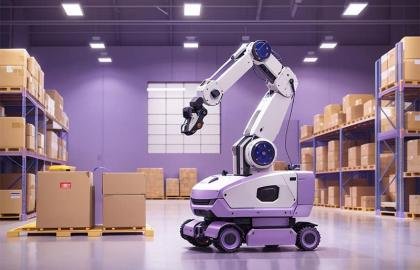
The open-plan office is evolving into a collaborative space for humans and machines. This article discusses...
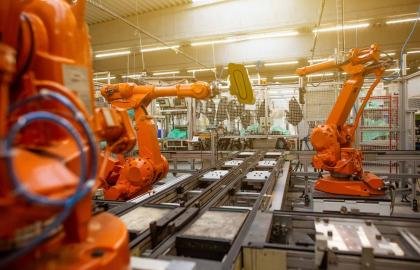
For a robot to be truly autonomous, it cannot be stopped by a closed door or...





Cookie preferences