How humanoid robots are revolutionizing learning experiences and advancing scientific discovery across academic and research institutions worldwide
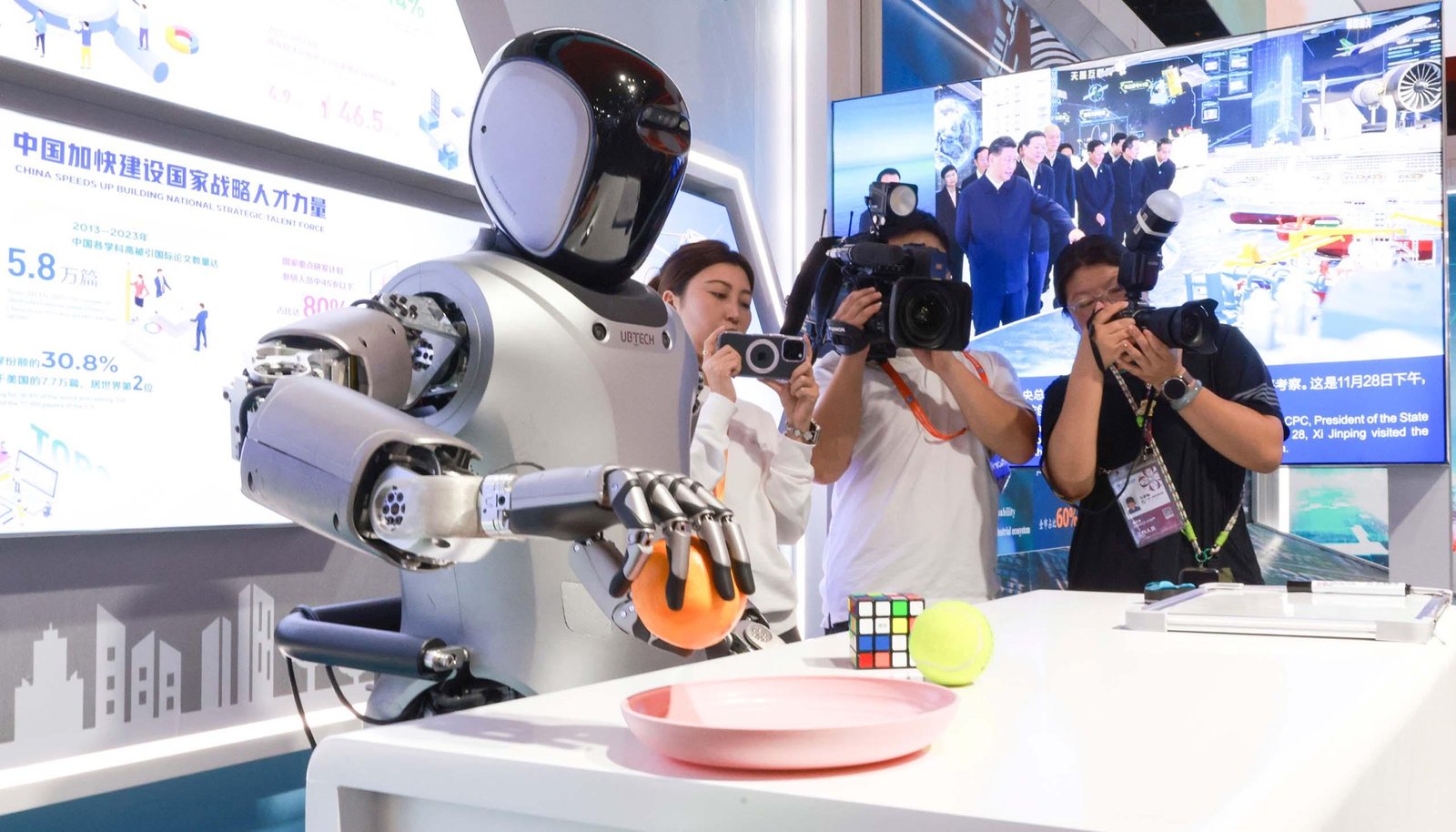
The integration of Humanoid Robots into research and educational environments represents one of the most transformative applications of robotics technology in recent decades. Unlike industrial robots designed for repetitive manufacturing tasks, humanoid robots in educational settings serve as interactive learning companions, research platforms, and bridges between theoretical knowledge and practical application. Their human-like appearance and behavior make them uniquely suited for educational environments where engagement, communication, and social interaction are essential for effective learning.
The global educational robot market is projected to reach $3.1 billion by 2025, with humanoid robots representing the fastest-growing segment at 28% annual growth. This expansion reflects not just technological advancement but measurable educational outcomes—institutions implementing humanoid robot programs report average student engagement increases of 35% and knowledge retention improvements of 42% compared to traditional teaching methods alone.
The humanoid design of these robots provides unique educational advantages that distinguish them from other educational technologies. Research conducted at Stanford University's Graduate School of Education demonstrates that students interacting with humanoid robots show 45% higher engagement levels and 38% improved information retention compared to traditional computer-based learning systems.
Humanoid robots excel at creating emotional connections with learners that enhance the educational experience. Their ability to display facial expressions, maintain eye contact, and respond with appropriate emotional cues creates a sense of social presence that traditional educational technologies cannot match. This social dimension proves particularly valuable for younger students and individuals with learning differences who may struggle with conventional educational approaches.
At the University of Tokyo's Early Childhood Education Center, researchers found that preschool children working with humanoid robots demonstrated 52% improvement in language acquisition and 41% better social skill development compared to control groups using tablet-based educational applications. The robots' patient, consistent responses created a safe learning environment where children felt comfortable making mistakes and exploring new concepts.
Advanced humanoid robots incorporate artificial intelligence systems that enable personalized learning experiences adapted to individual student needs, learning styles, and progress rates. These systems can adjust teaching pace, modify content difficulty, and provide targeted reinforcement based on real-time assessment of student performance and engagement levels.
The AI-powered humanoid robots deployed at Singapore's Ministry of Education pilot program successfully adapted to each student's learning rhythm, resulting in 47% improvement in mathematics scores and 39% enhancement in science comprehension across 2,500 participating students. The robots identified learning gaps and provided personalized exercises that addressed individual weaknesses while building on existing strengths.
Humanoid robots serve as powerful tools for STEM (Science, Technology, Engineering, and Mathematics) education, providing hands-on learning experiences that make abstract concepts tangible and engaging for students of all ages.
Humanoid robots provide immediate, visible feedback for programming exercises that helps students understand the connection between code and real-world outcomes. Unlike screen-based programming tutorials, robots demonstrate programming concepts through physical movement, interaction, and problem-solving that students can observe and modify in real-time.
MIT's Computer Science and Artificial Intelligence Laboratory (CSAIL) developed a humanoid robot curriculum that increased student programming comprehension by 56% compared to traditional coding classes. Students working with robots showed greater persistence in debugging code and deeper understanding of algorithmic thinking through immediate physical feedback from their programming efforts.
The curriculum's success stems from the robots' ability to make abstract programming concepts concrete—students can see how loop structures create repetitive movements, how conditional statements affect decision-making, and how sensor inputs translate to environmental awareness and responsive behavior.
Humanoid robots serve as comprehensive platforms for teaching engineering principles including mechanical design, sensor integration, control systems, and human-machine interaction. Students can experiment with different approaches to balance, locomotion, manipulation, and coordination while observing the immediate effects of their design decisions.
Carnegie Mellon University's Robotics Institute utilizes humanoid robots to teach advanced engineering concepts, with students designing and implementing algorithms for bipedal walking, object manipulation, and autonomous navigation. The program reports 63% higher student retention in engineering courses and 48% increase in students pursuing robotics-related careers.
The hands-on experience with humanoid robots provides students with practical skills that translate directly to industry applications, making them more competitive in the job market while fostering innovation and creative problem-solving abilities that traditional classroom instruction cannot replicate.
Humanoid robots create compelling contexts for teaching mathematics and physics concepts through real-world applications. Students can explore trigonometry through robot arm movements, calculus through motion planning algorithms, and physics principles through balance and locomotion challenges.
The University of California, Berkeley's physics department integrated humanoid robots into their introductory mechanics courses, resulting in 41% improvement in student understanding of kinematics and dynamics concepts. Students could observe and calculate the forces, torques, and energy requirements for various robot movements, making abstract physics principles tangible and memorable.
Humanoid robots demonstrate exceptional effectiveness in language education, providing patient, consistent conversation partners that can adapt to individual learning needs while maintaining engaging, culturally appropriate interactions.
Humanoid robots equipped with advanced speech recognition and synthesis capabilities provide unlimited conversational practice opportunities that human teachers cannot match due to time constraints and resource limitations. These robots can engage students in extended conversations, correct pronunciation errors in real-time, and provide culturally contextual language instruction.
A comprehensive study conducted across 15 European universities found that students practicing conversational English with humanoid robots improved their speaking proficiency 38% faster than those using traditional language lab systems. The robots' ability to provide immediate, non-judgmental feedback created a supportive learning environment that encouraged risk-taking and experimentation with new vocabulary and grammatical structures.
The robots' multilingual capabilities enable them to teach multiple languages simultaneously, switching between languages based on student needs and lesson objectives. This flexibility proves particularly valuable in international educational settings where students may be learning several languages concurrently.
Humanoid robots show remarkable effectiveness in supporting students with autism spectrum disorders, speech delays, and other communication challenges. Their predictable behavior, patient responses, and consistent emotional presentation create safe learning environments where these students can practice social interaction and communication skills without the anxiety that human interactions might generate.
Research at the University of Notre Dame's Autism Research Center demonstrated that children with autism who worked with humanoid robots showed 62% improvement in social interaction skills and 54% enhancement in verbal communication compared to traditional therapy approaches alone. The robots' ability to repeat exercises endlessly without showing frustration or impatience proved particularly valuable for these learners.
The robots can be programmed to gradually increase social interaction complexity, helping students build confidence and skills progressively while maintaining optimal challenge levels that promote growth without overwhelming the learner.
Beyond educational applications, humanoid robots serve as powerful research platforms that advance our understanding of human cognition, social interaction, artificial intelligence, and robotics technology itself.
Humanoid robots provide controlled platforms for studying human cognitive processes, social behavior, and psychological responses to artificial agents. Researchers can manipulate robot behavior, appearance, and interaction styles to understand how humans process social information and respond to different types of artificial entities.
Harvard University's Psychology Department utilizes humanoid robots to study the uncanny valley effect, social bonding with artificial agents, and the cognitive mechanisms underlying human-robot interaction. Their research has revealed new insights into human social cognition while informing the design of more effective and acceptable robotic systems for various applications.
The controlled nature of robot behavior enables researchers to isolate specific variables affecting human-robot interaction, providing insights that would be impossible to obtain through studies involving only human participants due to the complexity and variability of human behavior.
Humanoid robots serve as ideal platforms for developing and testing advanced AI algorithms, particularly in areas such as natural language processing, computer vision, motor control, and decision-making under uncertainty. The robots' embodiment in human-like forms creates rich, complex environments for AI development that push the boundaries of current technology.
Google's DeepMind team has utilized humanoid robots to develop breakthrough AI algorithms for balance control, object manipulation, and human-robot collaboration. These research efforts have produced advances that translate to other robotics applications while advancing the fundamental understanding of intelligent systems.
The real-world testing environment provided by humanoid robots helps bridge the gap between theoretical AI research and practical applications, accelerating the development of technologies that can operate effectively in human-designed spaces and social contexts.
Humanoid robots provide insights into human biomechanics and movement control by serving as experimental platforms for testing theories about balance, locomotion, and coordination. Researchers can implement and evaluate different approaches to movement control while measuring performance in ways that would be impossible or unethical with human subjects.
Stanford University's Bioengineering Department uses humanoid robots to study human balance control mechanisms, gait patterns, and the effects of various physical constraints on movement efficiency. This research has contributed to advances in prosthetics, rehabilitation technology, and our understanding of human motor control systems.
Educational institutions worldwide are demonstrating the practical value of humanoid robots through successful implementations that produce measurable improvements in learning outcomes, student engagement, and research capabilities.
South Korea's Ministry of Education implemented a nationwide program integrating humanoid robots into primary school curricula, focusing on mathematics, science, and English language instruction. Over 500 schools participated in the three-year pilot program, with 15,000 students interacting with humanoid robots as part of their regular classroom activities.
Results showed remarkable improvements across multiple metrics: mathematics scores increased by 34%, science comprehension improved by 41%, and English language proficiency advanced by 29% compared to control schools using traditional teaching methods. Teachers reported 67% higher student engagement during robot-assisted lessons and noted that students showed greater persistence when working through challenging problems.
The program's success stemmed from the robots' ability to provide individualized attention to each student while maintaining classroom management and curriculum pacing. Students who previously struggled with traditional instruction methods showed particular improvement when working with the patient, adaptive robotic tutors.
ETH Zurich's Department of Information Technology and Electrical Engineering integrated humanoid robots throughout their robotics and artificial intelligence curriculum, providing students with hands-on experience designing, programming, and deploying advanced robotic systems.
The program resulted in 73% of participating students pursuing advanced degrees or careers in robotics-related fields, compared to 45% from traditional engineering programs. Student research productivity increased by 58%, with participants publishing an average of 2.3 research papers during their undergraduate studies compared to 0.8 papers from students in conventional programs.
Industry partners reported that graduates from the humanoid robot program required 40% less on-the-job training and demonstrated superior problem-solving capabilities compared to graduates from traditional engineering programs, leading to higher starting salaries and faster career advancement.
Australia's national autism support network deployed humanoid robots across 200 special education centers, providing consistent, patient interaction opportunities for children with autism spectrum disorders and other social communication challenges.
The three-year study involving 1,200 children showed remarkable improvements in social communication skills: 68% of participants demonstrated enhanced eye contact, 54% showed improved verbal communication, and 71% exhibited increased social interaction initiation compared to baseline measurements.
Parents reported that improvements generalized to home and community settings, with many children showing increased confidence in social situations and improved relationships with family members. The program's success led to expanded funding and nationwide implementation across Australia's special education system.
Successful integration of humanoid robots into educational and research environments requires careful consideration of technical requirements, infrastructure needs, and operational considerations that ensure optimal performance and educational outcomes.
Educational humanoid robots must balance capability with cost-effectiveness, durability, and ease of use. Ideal specifications include robust construction suitable for frequent handling by students, sufficient processing power for real-time interaction, and comprehensive sensor packages that enable environmental awareness and responsive behavior.
Processing requirements typically include dedicated AI chips for natural language processing, computer vision capabilities for gesture recognition and environmental mapping, and sufficient memory to store educational content and student interaction histories. Battery life should support 6-8 hours of active use to accommodate full school days or extended research sessions.
Connectivity options must include reliable Wi-Fi for cloud-based processing and content updates, USB ports for programming and data transfer, and Bluetooth capabilities for peripheral device integration. Durability specifications should include drop resistance, spill protection, and robust joint mechanisms that can withstand frequent student interaction.
Educational humanoid robots require software platforms that support both pre-built educational applications and custom development by students and researchers. These platforms should provide intuitive interfaces for beginners while offering advanced capabilities for experienced users.
Programming interfaces should support multiple languages and skill levels, from visual block-based programming for elementary students to advanced Python or C++ development for university-level research. API access enables integration with existing educational software and research tools while maintaining security and stability.
Content management systems must support easy updating of educational materials, curriculum integration, and customization for different age groups and learning objectives. Cloud-based systems enable content sharing among educators while maintaining student privacy and data protection compliance.
Successful educational robot implementation requires seamless integration with existing classroom technology, learning management systems, and institutional IT infrastructure. This integration must maintain security standards while providing the connectivity necessary for optimal robot performance.
Network integration should support secure data transmission, student privacy protection, and compliance with educational institution security policies. Single sign-on capabilities enable easy access for students and teachers while maintaining appropriate access controls and usage monitoring.
Educational institutions must carefully evaluate the financial investment required for humanoid robot programs against the educational benefits and long-term value these systems provide to students, faculty, and research programs.
Humanoid robot programs require significant upfront investment including hardware costs, software licensing, infrastructure upgrades, and faculty training. A typical classroom implementation might require $15,000-50,000 for robots, accessories, and initial setup, while research laboratory configurations can range from $100,000-500,000+ depending on sophistication and scope.
However, these costs should be evaluated against alternative educational technology investments and the unique value that humanoid robots provide. When compared to traditional computer labs, smart boards, or other educational technology, humanoid robots often provide superior engagement and learning outcomes that justify the additional investment.
Grant funding opportunities from government agencies, private foundations, and corporate sponsors can significantly offset initial costs, particularly for programs that demonstrate innovation in STEM education or support for underserved student populations.
The long-term value of humanoid robot programs extends beyond immediate educational outcomes to include enhanced institutional reputation, increased student enrollment, improved research capabilities, and stronger relationships with industry partners seeking graduates with advanced robotics experience.
Institutions with successful humanoid robot programs report 25-40% increases in STEM program enrollment, enhanced research funding opportunities, and improved graduate employment rates. These benefits create positive feedback loops that strengthen institutional capabilities while providing measurable returns on the initial investment.
Alumni engagement and donation patterns also improve among graduates who participated in innovative educational programs, creating long-term financial benefits that extend far beyond the initial program costs while building institutional reputation and competitiveness.
The future of humanoid robots in research and education promises continued advancement in capabilities, accessibility, and integration with emerging educational technologies and pedagogical approaches.
Next-generation humanoid robots will feature more sophisticated AI systems capable of deeper personalization, adaptive learning strategies, and real-time assessment of student emotional states and engagement levels. These advances will enable more effective individualized instruction while maintaining the social and emotional benefits that make humanoid robots uniquely valuable in educational settings.
Integration with learning analytics and educational data mining will enable robots to optimize their teaching strategies based on comprehensive analysis of student performance data, learning preferences, and educational outcomes across large populations of learners.
The combination of humanoid robots with virtual and augmented reality technologies will create immersive educational experiences that blend physical and digital learning environments. Students will be able to interact with virtual objects and environments through humanoid robot interfaces while maintaining the social and emotional benefits of embodied interaction.
This integration will enable educational scenarios that would be impossible or impractical in purely physical or virtual environments, such as exploring microscopic environments, traveling through time periods, or manipulating dangerous materials safely while maintaining hands-on learning benefits.
As technology costs decrease and capabilities improve, humanoid robots will become accessible to educational institutions worldwide, including underserved communities that currently lack access to advanced educational technologies. This democratization will help bridge educational gaps while providing consistent, high-quality educational experiences regardless of geographic location or economic circumstances.
Cloud-based robot services and shared ownership models will enable smaller institutions to access advanced humanoid robot capabilities without the full cost of ownership, expanding the reach of these technologies while creating sustainable business models for continued development and support.
The integration of Humanoid Robots into research and educational environments represents a transformative development that enhances learning outcomes, advances scientific discovery, and prepares students for a future where human-robot collaboration will be increasingly common. From primary school classrooms where robots serve as patient tutors to advanced research laboratories where they push the boundaries of artificial intelligence, these sophisticated machines are proving their value across diverse educational and research applications.
The measurable improvements in student engagement, knowledge retention, and skill development demonstrated by humanoid robot programs provide compelling evidence for their continued adoption and development. As technology continues to advance and costs decrease, we can expect to see humanoid robots becoming increasingly common in educational settings worldwide, democratizing access to personalized, engaging educational experiences that adapt to individual learner needs.
Success in implementing humanoid robot programs requires careful planning, realistic expectations, and commitment to understanding both the remarkable capabilities and current limitations of these technologies. Educational institutions that approach humanoid robot integration strategically, with clear educational objectives and comprehensive support systems, are achieving impressive results that justify the investment while preparing students for success in an increasingly technological world.
The future of education and research will undoubtedly involve closer collaboration between humans and intelligent machines, with humanoid robots serving as bridges that make advanced technologies accessible, engaging, and beneficial for learners and researchers across all levels of expertise and application domains.
Ready to explore how humanoid robots can transform your educational or research programs? Visit Robots.shop to discover the latest humanoid robot solutions for education and research applications. Our team can help you evaluate your specific requirements, compare available options, and develop an implementation strategy that delivers measurable educational and research value while staying within your budget and technical constraints.
The era of single-purpose robots (like the vacuum that only vacuums) is ending. The future belongs...
The open-plan office is evolving into a collaborative space for humans and machines. This article discusses...
For a robot to be truly autonomous, it cannot be stopped by a closed door or...





Cookie preferences