For a CEO or Operations Manager, buying a Robot Dog is a significant decision. It looks expensive, and it looks risky. But successful businesses don't buy robots because they are cool; they buy them because they solve problems and make money.
The business case for quadruped robots has matured. It is no longer about R&D experiments; it is about deployment at scale. Whether you run a construction firm, a security agency, or a real estate company, here is how a robot dog benefits your bottom line.
The most obvious benefit is automating labor. A robot dog can perform patrols, inspections, or deliveries that previously required a human. While the robot won't replace the human entirely, it acts as a "force multiplier."
Instead of paying three security guards to patrol a large perimeter, you might pay one guard to monitor three robots. The robot doesn't need overtime pay, health insurance, or coffee breaks. Over a 3-year period, the Total Cost of Ownership (TCO) of a robot is often significantly lower than the cost of a full-time employee (FTE) for the same task.
Sending a human into a dangerous area—like a high-voltage substation or a chemical plant—carries liability. Accidents happen, and they are tragic and expensive. Workers' compensation claims, legal fees, and downtime can cripple a business.
By using Robot Dogs for hazardous tasks, you remove the human from the loop. Many insurance companies are beginning to offer lower premiums to businesses that utilize robotic inspection because the risk profile is demonstrably lower.
Robots are data machines. A human inspector might write "pipe looks rusty." A robot dog records "Pipe 4B has 12% surface corrosion, increased by 2% since last week."
This granular, consistent data allows businesses to move from Reactive Maintenance (fixing things when they break) to Predictive Maintenance (fixing things before they break). This shift saves millions in avoided downtime. In manufacturing, avoiding just one hour of line stoppage can pay for the robot entirely.
Never underestimate the "cool factor." Deploying high-tech robotics signals to your clients, investors, and competitors that your company is on the cutting edge of innovation.
A mid-sized construction firm purchased a robot dog for site scanning. They featured the robot in their bid presentations for new projects.
Result: They won two major contracts specifically because the clients were impressed by the "digital twin" capability the robot provided, viewing the firm as more transparent and modern than competitors.
Top engineering and technical talent want to work with the best tools. A company that uses Robot Dogs is seen as an exciting place to work. It helps attract young professionals who want to work in robotics and AI, rather than legacy systems. It also improves morale for existing workers by removing the dullest parts of their jobs.
When calculating ROI, consider these factors:
| Cost Savings | Value Added |
|---|---|
| Reduced Labor Hours | Higher Quality Data |
| Lower Insurance Premiums | Brand Differentiation |
| Less Downtime | New Service Offerings |
| Reduced Travel Costs | 24/7 Operations |
The question is no longer "Can we afford a robot dog?" but "Can we afford to be the last one in our industry to get one?" The benefits—safety, data, efficiency, and brand value—create a compelling argument for deployment.
Ready to build your business case?
Contact our enterprise team at Robots.shop. We can help you calculate the specific ROI for your industry and select the right robotic platform for your goals.

For a robot to be truly autonomous, it cannot be stopped by a closed door or...
Retail is a low-margin game, and efficiency is king. This article examines real-world case studies of...
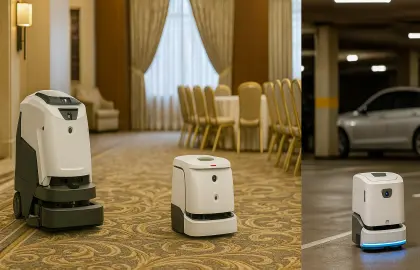
Critics argue that robots make service "cold" and impersonal. Proponents argue the opposite: that robots handle...





Cookie preferences