When you spend $100,000 on a piece of high-tech machinery, you worry about taking it out in the rain. But Robot Dogs are not delicate smartphones; they are industrial tools designed to work where humans can't. The question is, just how tough are they?
Can they walk through a blizzard? Can they survive the heat of a steel mill? Can they wade through a flooded tunnel? The short answer is yes—but with caveats. Let's break down the environmental hardening of modern quadruped robots and see what they can (and can't) handle.
The most common enemy of electronics is water. Industrial robots are rated using the IP (Ingress Protection) scale. Most commercial robot dogs, like the Unitree Go2 or Boston Dynamics Spot, carry an IP rating of IP65 or IP67.
This means a standard robot dog can happily patrol in a rainstorm, walk through mud puddles, or work in a dusty cement factory without failing. They are sealed units. However, they are not submarines; deep underwater exploration is still the domain of ROVs (Remotely Operated Vehicles).
Batteries and computers hate extreme temperatures. Yet, robot dogs are deployed in both the Arctic and the desert.
In sub-zero temperatures, battery life degrades. To combat this, ruggedized robots use self-heating batteries. They keep themselves warm to maintain efficiency. Robots have been successfully tested in temperatures as low as -20°C (-4°F). The main challenge is ice on the joints, but powerful motors can usually break through thin ice accumulation.
Heat is harder to manage because the robot generates its own heat while moving. Most robots are rated to work in ambient temperatures up to 45°C or 50°C (122°F). For environments hotter than that (like near a blast furnace), robots can be fitted with "thermal suits"—reflective jackets that shield the body—or active cooling systems. The lack of a human operator means the robot doesn't need air conditioning, just component cooling.
Researchers tested a robot dog in a lava tube cave in Iceland to simulate Mars exploration. The robot faced abrasive volcanic sand, near-freezing temperatures, and jagged rocks.
Result: The robot completed the mission. The sealed joints prevented the volcanic dust—which destroys normal gears—from entering the motors, proving the viability of quadrupeds for planetary exploration.
We've mentioned radiation before, but what about electromagnetic interference (EMI)? High-voltage power lines create strong magnetic fields that can confuse compasses and crash computers.
Industrial Robot Dogs are built with shielded electronics (Faraday cages) to operate right next to 400kV transformers without glitching. This "EM hardening" is a key difference between a toy robot and an industrial tool.
Industrial sites are rough. Robots will bump into walls, get hit by swinging doors, or even be kicked by confused livestock. Quadruped robots are designed to be mechanically robust.
Their legs act as shock absorbers. If a robot falls, the legs are compliant (springy), absorbing the impact energy to protect the central chassis. Many models have "fall recovery" modes where they can roll over and stand up, much like a real dog.
Not all robot dogs are created equal.
| Feature | Consumer / Research Robot | Industrial Rugged Robot |
|---|---|---|
| IP Rating | None or IP54 (Splash proof) | IP67 (Submersible / Dust tight) |
| Temp Range | 0°C to 35°C | -20°C to 50°C |
| Chassis Material | Plastic / Light Aluminum | Carbon Fiber / Reinforced Alloy |
| Price | $1,500 - $5,000 | $50,000+ |
So, can Robot Dogs work in extreme environments? Absolutely. They are engineering marvels built to endure the elements that would stop a human or a wheeled vehicle.
Whether it is the freezing tundra, a dusty mine, or a rainy oil platform, these robots are ready to work. They are the tough, all-weather friends that modern industry needs.
Find the right robot for your environment.
Need a robot that can swim or survive a fire? Visit Robots.shop to filter our robot selection by IP rating and environmental specs.


The era of single-purpose robots (like the vacuum that only vacuums) is ending. The future belongs...
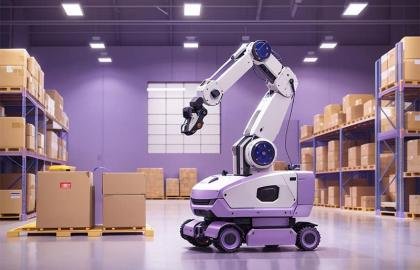
The open-plan office is evolving into a collaborative space for humans and machines. This article discusses...
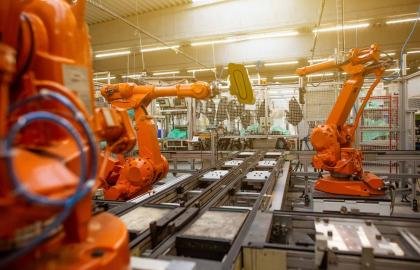
For a robot to be truly autonomous, it cannot be stopped by a closed door or...





Cookie preferences